
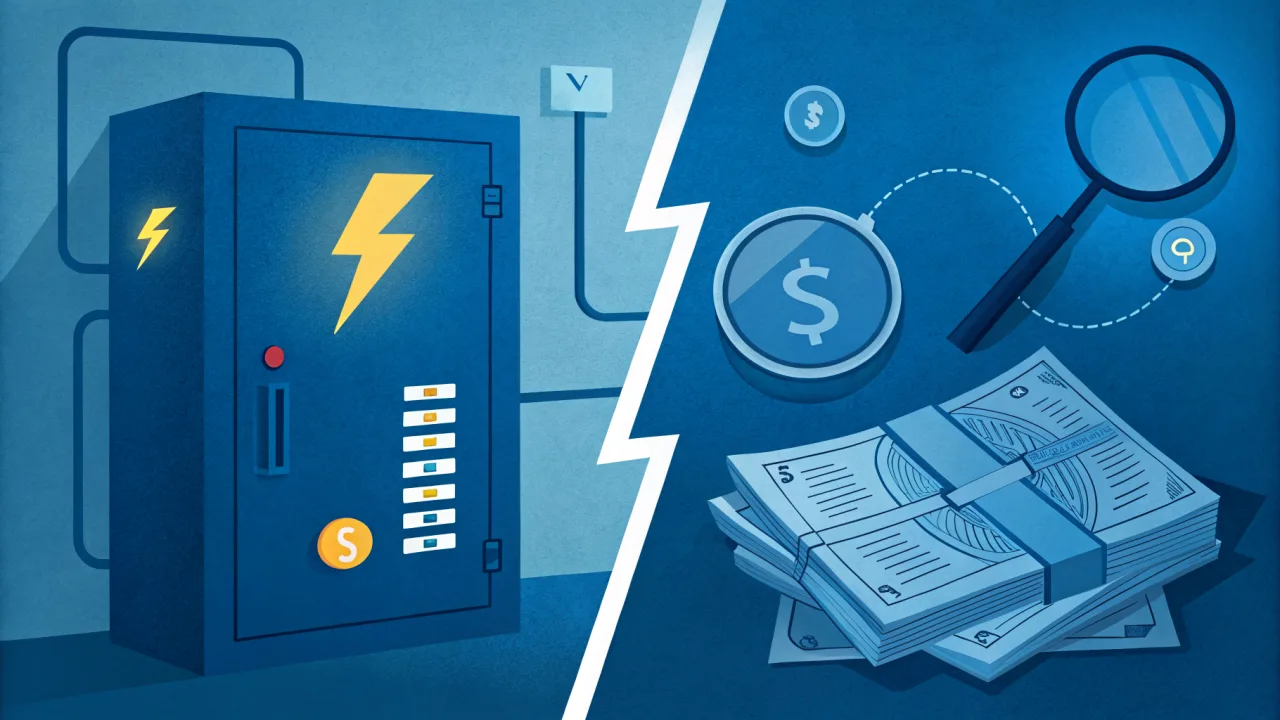
Eyedro vs EnergyCAP comes down to one question: do you need real-time, device-level monitoring or enterprise-wide utility bill management? Eyedro delivers live data from submeters, solar arrays, and EV chargers. EnergyCAP centralizes and audits bills across large portfolios. The right pick reshapes how quickly you can see and act on energy use.
Table of Contents
- Eyedro vs EnergyCAP: The Key Difference
- How We Compare Energy Management Platforms
- Eyedro vs EnergyCAP: Side-by-Side Feature Comparison
- Eyedro vs EnergyCAP: Which Should You Choose?
- Common Mistakes When Choosing an Energy Management Platform
- Why Eyedro Stands Out for Real-Time Energy Monitoring
- How Real-Time Data Transforms Energy Management
- The Role of Hardware in Energy Monitoring
- Frequently Asked Questions
Eyedro vs EnergyCAP: The Key Difference
The two platforms approach energy data from opposite ends. Eyedro starts at the circuit level with wireless submeters and three-phase energy meters. It sends that data to the MyEyedro Cloud, where MyEyedro Pro turns it into a command center view. If you want the underlying idea, our explainer on real-time electricity monitoring walks through it.
EnergyCAP starts with the utility bill. It ingests bill data, flags errors, and centralizes reporting across properties. It also offers Watts AI for quick data insights and a Carbon Hub for emissions tracking.
One platform gives you granular, real-time operational data. The other gives you portfolio-wide financial oversight. Both have value. They simply solve different problems.
Hardware is the other dividing line. Eyedro includes physical monitoring equipment. EnergyCAP is software focused on bill management, though it connects to some third-party systems.
Businesses that need to track specific equipment, allocate energy costs per tenant, or monitor solar and EV production lean toward Eyedro. Organizations juggling hundreds of bills across many sites find EnergyCAP more natural.
How We Compare Energy Management Platforms
Five criteria matter most when you choose an energy management platform.
Real-time monitoring capabilities
Can you see energy use as it happens? Eyedro refreshes data every few seconds through the MyEyedro Cloud. EnergyCAP works from bills, which arrive monthly or quarterly. When you need instant feedback to change behavior, that gap is large. The framework behind ISO 50001 energy management leans on exactly this kind of continuous measurement.
Hardware and submetering integration
Does the platform support physical sensors? Eyedro ships wireless submeters for electricity, water, and gas, and it tracks solar production and EV charging. EnergyCAP includes no hardware. It relies on existing meters and bill data.
Reporting and analytics depth
Eyedro offers fiscal and usage benchmarking, multi-tiered financial forecasting, and automated alerts. EnergyCAP provides BI-style reporting, utility bill audits, and emissions tracking through its Carbon Hub. The depth is comparable. The focus is not.
Target audience and scalability
Eyedro scales from a single home to a multi-tenant commercial building. EnergyCAP targets large enterprises with many utility accounts.
Ease of deployment
Eyedro asks you to install submeters and connect to the cloud. EnergyCAP asks you to upload bills and link utility data feeds. The setup curves differ in kind, not just degree.
These criteria help you judge which platform fits your operation.
Eyedro vs EnergyCAP: Side-by-Side Feature Comparison
| Feature | Eyedro | EnergyCAP |
|---|---|---|
| Real-time monitoring | Yes, high-resolution analytics from submeters and meters | No, based on periodic bill data |
| Utility bill auditing | No, focuses on live data | Yes, built-in bill auditing and error detection |
| Hardware and submetering | Yes, wireless submeters for electricity, water, gas; three-phase meter | No, no hardware provided |
| Solar monitoring | Yes | Not specified |
| EV charging monitoring | Yes | Not specified |
| Carbon and ESG tools | Via benchmarking and forecasting reports | Yes, Carbon Hub for emissions tracking |
| Reporting and analytics | Fiscal/usage benchmarking, multi-tiered forecasting, automated alerts | BI reporting, Watts AI insights |
| Target market | Homeowners, small-to-medium businesses, multi-tenant commercial | Large enterprises, public sector, utility portfolios |
| Ease of setup | Requires installation of hardware and cloud connection | Upload bills, connect utility data feeds |
Sources: Eyedro product facts, EnergyCAP product page.
This table shows how rarely Eyedro and EnergyCAP land in the same row. One is strong where the other is absent.
Eyedro vs EnergyCAP: Which Should You Choose?
Your primary energy management goal decides this.
Choose Eyedro if you need real-time device-level data
If you run a commercial building and want to see which circuit, machine, or floor is drawing power right now, Eyedro gives you that view. It suits multi-tenant billing where costs follow actual sub-metered use. Solar owners and EV station operators get dedicated monitoring, and our solar energy monitor overview shows how generation and consumption sit side by side. Homes and small businesses run on the same platform through the MyEyedro Cloud.
Choose EnergyCAP if you manage a large bill portfolio
If you process hundreds of utility bills each month and need to catch billing errors, centralize data, and report on ESG metrics, EnergyCAP fits that workflow. Its Carbon Hub tracks emissions, which maps to the federal reporting expectations the U.S. Environmental Protection Agency sets out. EnergyCAP also offers Bill Capture Services, a separate service level that handles bill payment on your behalf.
Our take
If you operate a building where real-time insight drives immediate action, start with Eyedro. If you oversee a large property portfolio and need bill oversight and carbon compliance first, evaluate EnergyCAP. To see live data in a facility, explore Eyedro’s energy monitoring solutions and contact the team for details. To review bill audit workflows, request a demo from EnergyCAP.
Common Mistakes When Choosing an Energy Management Platform
Buying bill management when you need operational data
Many buyers pick a platform on bill auditing alone. Later they realize they cannot see why a specific circuit spiked last Tuesday. Without real-time data, diagnosing equipment failures or changing behavior mid-cycle becomes guesswork.
Overlooking hardware compatibility
Some energy software assumes meters already exist. If your building lacks sub-metering, a software-only platform has no circuit-level data to analyze. Eyedro includes the hardware, which simplifies deployment when you start from scratch.
Assuming one platform fits home and commercial equally
Most tools specialize. EnergyCAP targets the enterprise. Eyedro serves homes and commercial sites, yet its commercial strengths, multi-tenant billing, EV monitoring, and three-phase metering, are where it stands apart. Decide what matters to your operation before you compare features.
Why Eyedro Stands Out for Real-Time Energy Monitoring
Eyedro was built to turn complex utility data into actionable savings. The platform pairs hardware and software in one ecosystem.
High-resolution real-time analytics
Wireless submeters capture electricity usage every few seconds. The MyEyedro Cloud processes that data and presents it in a customizable command center, so facility managers see changes the moment they happen.
Multi-tiered financial forecasting
Eyedro predicts energy costs from current usage patterns. Budgets get more accurate, and month-end surprises shrink.
Fiscal and usage benchmarking
Compare a building’s performance to its own history or to baselines. The view shows where you improve and where you slip.
Submetering for electricity, water, and natural gas
The hardware supports all three utilities, so you can allocate costs per tenant, per department, or per machine without guesswork.
EV charging and solar monitoring
Track solar production and EV charger consumption alongside every other load for a complete picture of your energy ecosystem, an integrated approach echoed by research from the National Renewable Energy Laboratory.
Automated alerts and professional reports
Set thresholds for demand or cost, and Eyedro alerts you when you cross them. You can read more in our guide to advanced alerts, then generate reports for stakeholders or compliance. The MyEyedro Pro license unlocks the advanced features commercial users rely on.
How Real-Time Data Transforms Energy Management
Real-time data changes how you respond to energy use. Monthly bills tell you about a problem weeks later. Live data tells you now.
Detect anomalies early
A sudden jump in a motor’s draw can signal mechanical failure. Real-time alerts let you act before production stops, a pattern we documented in a machine utilization case study.
Optimize demand
Many utilities bill on peak demand. With live visibility, you can stagger equipment startup and avoid the short spikes that raise your rate. Guidance from ENERGY STAR treats demand management as a core efficiency lever.
Support tenant billing
Submetered tenants expect accurate invoices. Real-time data bills actual consumption, not estimates, which cuts disputes and builds trust.
Validate energy projects
After a solar install or an HVAC upgrade, you need proof the savings are real. Eyedro shows pre- and post-implementation data side by side, as one commercial energy savings case study illustrates.
Continuous monitoring is widely recognized by energy authorities, including the U.S. Department of Energy, as a low-cost path to efficiency. The shift from monthly review to daily practice is where much of that value lives.
The Role of Hardware in Energy Monitoring
Hardware is easy to overlook during platform selection. Many assume software solves everything. If a building lacks the right sensors, though, the software has nothing to analyze.
Why hardware matters
You cannot manage what you do not measure. A platform that reads only utility bills misses what happens inside a facility between meters. Hardware closes that gap.
Eyedro hardware ecosystem
Eyedro provides wireless submeters that clamp onto individual circuits. They work on single-phase and three-phase systems up to 600V and 3000A, and the data travels to the MyEyedro Cloud over your internet connection. Homes use Eyedro Home Energy Monitors for circuit-by-circuit visibility. Commercial buildings use three-phase meters for larger loads.
Comparison to competitors
EnergyCAP does not sell hardware. It works with existing meters and bill data, which is fine if sub-metering is already in place. If it is not, you buy and integrate meters separately.
Integration with solar and EV
Eyedro hardware connects to solar inverters and EV chargers, so production and consumption appear in one dashboard. That is harder to achieve with a software-only platform.
Hardware is not the flashiest part of energy management. Without it, you work with estimates rather than facts.
Frequently Asked Questions
How does Eyedro work?
Eyedro uses wireless sub-meters and three-phase energy meters that clamp onto your circuits, then streams that data to the MyEyedro Cloud. There, MyEyedro Pro analyzes usage, generates reports, and sends alerts. It works for both homes and commercial buildings.
Is Eyedro a good EnergyCAP alternative?
For teams that need real-time, device-level data and hardware-based submetering, yes. EnergyCAP centers on utility bill auditing and portfolio reporting, so the better choice depends on whether your priority is operational visibility or bill management.
What should I look for in energy management software?
Match the tool to your core need. Weigh real-time monitoring depth, hardware and submetering support, reporting and ESG features, target-market fit, and how much effort deployment takes.
Does EnergyCAP include hardware or submetering?
No. EnergyCAP is software focused on utility bill auditing, BI reporting, its Carbon Hub, and Watts AI. It relies on existing meters and bill data rather than supplying sensors.